
Azelaic Acid in Private Label Skincare

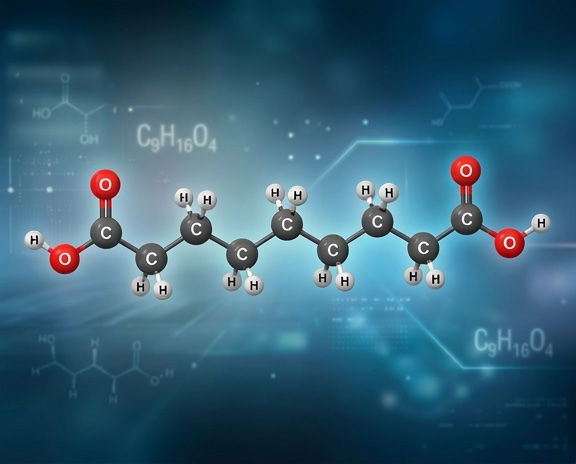
Azelaic acid is a naturally occurring dicarboxylic acid found in grains such as wheat, rye, and barley, and also produced by the yeast Malassezia. In skincare and dermatology it is used synthetically as a versatile topical active that addresses multiple concerns with a favourable safety profile. It is valued for treating mild-to-moderate acne, papulopustular rosacea, and various forms of hyperpigmentation, including post-inflammatory hyperpigmentation and melasma. Its multi-modal actions, relatively low irritation potential compared with stronger actives such as high-strength retinoids or hydroquinone, and suitability for many skin types (including sensitive, darker skin tones, and during pregnancy) have made it a staple in both prescription and cosmetic formulations.
Key Benefits in Skincare
Azelaic acid works through several complementary mechanisms. It exhibits antibacterial activity by inhibiting protein synthesis in acne-associated bacteria such as Cutibacterium acnes (formerly Propionibacterium acnes) and Staphylococcus epidermidis, without promoting antibiotic resistance. It also displays keratolytic and comedolytic effects by normalising keratinocyte proliferation and differentiation, which helps unclog pores and reduce both inflammatory lesions and comedones. Anti-inflammatory properties calm redness and swelling, making it particularly useful for rosacea. As a competitive inhibitor of tyrosinase, it reduces melanin production preferentially in hyperactive melanocytes, helping fade dark spots and even skin tone without bleaching normal surrounding skin. Additional antioxidant activity scavenges free radicals and can support overall skin resilience.
10% Azelaic Acid delivers mild brightening and acne-control effects with low irritation risk. In most users, 10% achieves noticeable tone improvement within 8–12 weeks. Moreover, combining it with barrier-strengthening co-actives such as Niacinamide or Panthenol improves overall tolerability and visible brightness.
The 15-20% concentration offers stronger anti-inflammatory and depigmenting results usually within 6-8 weeks. However, it may induce stinging, dryness, or transient erythema—especially in sensitive skin types.
Results are gradual rather than dramatic, and the ingredient performs best as part of a consistent routine rather than as a standalone miracle. It does not reduce sebum production significantly, does not cause photosensitivity, and does not stain skin or clothing. Side effects are generally mild and transient—stinging, burning, itching, or dryness—especially when first introduced; genuine allergy is rare.
Because of its pregnancy safety and suitability across skin tones, azelaic acid is frequently recommended where stronger agents are contraindicated or poorly tolerated.
Scheduling in the Australian Poisons Standard
In Australia, azelaic acid is regulated under the Standard for the Uniform Scheduling of Medicines and Poisons (SUSMP, or Poisons Standard) administered by the Therapeutic Goods Administration (TGA). Current scheduling (2025) places dermal preparations for human therapeutic use in Schedule 2 (Pharmacy Medicine). This means products intended for therapeutic purposes (including common 15% gels or 20% creams/lotions used for acne or rosacea) are available from pharmacies without a prescription but should be supplied with pharmacist advice. Non-dermal therapeutic uses fall under Schedule 4 (Prescription Only).
All other preparations, including cosmetics and industrial uses, are captured under Schedule 5 requiring appropriate warning statements and first-aid instructions on the label. These include:
Caution (located at top of main label)
Appendix F Safety Directions 1 and 4
1 - Avoid Contact with eyes
4 - Avoid contact with Skin
Appendix E – First Aid Instructions – A and E1
E1 - If in eye wash out immediately with water
A- For advice contact Poisons Information Center 131126.
At this stage there are no restrictions on the strength of Azelaic Acid in Schedule 5 (2025) although it has been reported that discussions have focused on clarifying the boundary between therapeutic and cosmetic use and that proposals have sought to limit cosmetic preparations to 10% or less azelaic acid while keeping them in Schedule 5 but this has yet to be implemented.
For cosmetic use no therapeutic claims can be made so limit claims to:
“Reduces visible dark spots and discoloration.”
“Helps refine texture and unclog pores.”
“Balances skin tone and improves clarity.”
Formulation Challenges Arising from Poor Solubility
Azelaic acid is only sparingly soluble in water (approximately 0.21–0.24 g/100 mL at 20–25 °C; solubility increases modestly with temperature). It has limited solubility in many cosmetic oils as well. This presents significant formulation hurdles, especially for the higher concentrations (10–20%) needed for robust clinical efficacy. Undissolved material can lead to gritty texture, recrystallisation over time (particularly upon cooling or pH shifts), instability, reduced bioavailability, and potential irritation from crystalline particles. High loadings also increase the risk of stinging or dryness.
Formulators address these issues through several distinct approaches, each with trade-offs in aesthetics, stability, skin feel, and delivery.
Suspensions keep the acid in particulate form rather than fully dissolving it. Micronised or microfine sized azelaic acid particles are dispersed in a cream, gel, or silicone base, often with stabilisers to prevent aggregation, sedimentation, or Ostwald ripening. This allows high loadings without relying on solvents and can provide a reservoir effect for gradual release. Particle size is important otherwise the product may feel slightly grainy and can still risk recrystallisation under certain storage conditions. The main benefit of a suspension is the free acid remains intact and thus generally considered to be more effective but also more irritating as a result of higher potency.
Salt forms convert the free acid into more water-soluble mono- or disodium (or other) salts by neutralisation, typically raising the pH outside the skin's pH range. These salts dissolve more readily in aqueous phases and can be more easily incorporated into serums, gels or emulsions resulting in end products with a more elegant skin feel however with a reduced proportion of the active free-acid form (the free acid is generally considered more bioactive form) it would be be less effective and too alkaline compared to the pH of the skin. Salt forms may simplify aqueous processing but in our opinion not a viable option if skin pH and efficacy is a priority. Many users using this type of formulation report little benefit and notice significant changes when changing to a suspension or dissolved formulation.
Dissolution in glycols and co-solvents is a common route to clear, stable solutions. Azelaic acid shows good solubility in propylene glycol, dipropylene glycol, polyethylene glycols, ethoxydiglycol, butoxydiglycol, propanediol, and related polyols, especially with mild heating. Concentrations of 10–20% azelaic acid can be achieved in products with a high-glycol concentration. The problem with this method is that high glycol levels can feel sticky and increase the irritation potential, not to mention many glycols do not fit our Cleanical philosophy.
A popular alternative is the derivative potassium azeloyl diglycinate (PAD). This water-soluble compound links azelaic acid to glycine and forms a potassium salt. It incorporates easily into light serums, gels, and lotions, offers moisturising benefits from the glycine moiety, and is generally milder compared to azelaic acid, though clinical data remain less extensive than for the free azelaic acid and concentrations used are typically lower. It is not interchangeable on a weight-for-weight basis with the parent acid.
Here at PLC we decided to use the suspension option for our white label azelaic acid cream as potency and efficacy is a high priority for us and to balance it with skin feel so the suspension method seemed to be the best option available. So we developed a 10% Azelaic Acid + 5% Niacinamide Cream for cosmetic use. We limited the azelaic acid to 10% for two main reasons: 1) to help reduce the irritation side effect observed with higher strengths and 2) in case the regulations change and limit cosmetic use to 10% which seems to be likely in the future.
We added 5% niacinamide which some suggest this combination is equivalent to 15% Azelaic acid with less irritation. Coming soon!


Comments